November 16, 2023 – November 16, 2025: A Journey of Advocacy, Civic Vigilance, and Community Diplomacy
Two years after his arrival in the United States, Dr. Harrisson Ernest has established himself as one of the most prominent voices of the active Haitian diaspora. A physician, communicator, and respected analyst, he multiplies conferences, public interventions, and community meetings to raise awareness among Haitians living abroad about the humanitarian, social, and political emergency facing Haiti.
His message is constant, almost relentless: the diaspora must once again become a structuring force—not only through economic transfers, but also through direct support to disadvantaged neighborhoods, displaced persons’ camps, and areas abandoned by the State and overrun by armed violence.
But this discourse, presented as a call for solidarity and collective responsibility, worries certain circles, both in Haiti and abroad. Why?
A Context Where Citizen Speech Becomes a Political Act
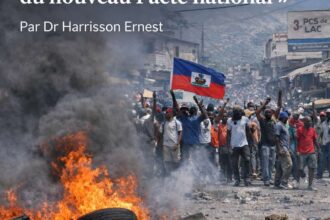
Since 2021, institutional, security, and humanitarian crises have plunged Haiti into extreme uncertainty. Popular neighborhoods, long marginalized, have become the beating heart—but also the unstable epicenter—of armed violence, forced displacement, and social breakdown.
In this context, any call for community organization, resource pooling, or local reconstruction is immediately perceived as a political act, even an attempt at influence.
By focusing specifically on popular neighborhoods, Dr. Ernest confronts the country’s central fracture: the divide between vulnerable populations and political, economic, or intellectual elites. His positions are unsettling because they highlight a reality often ignored:
Haiti will not recover without its most marginalized areas .
A Dual Audience: The Diaspora and Local Residents
The two pillars of his message are clear:
- The Haitian diaspora, a strategic resource that remains underused
According to him, the diaspora suffers from a double illusion:
believing it can do nothing,
believing it is already doing enough through remittances and occasional support.
Yet, he insists, the current crises demand more: mentorship, structured funding, political influence with U.S. lawmakers, international advocacy, logistical support for local organizations, and revitalization of community production.
- Residents of low-income neighborhoods and displaced persons’ camps
Dr. Ernest speaks about them insistently. He acknowledges their extraordinary resilience, but also their moral fatigue and sense of abandonment.
His message to these communities is clear:
You deserve better; the diaspora must become your direct and constant ally .
Why Does His Message Concern Certain Groups?
Several factors explain these concerns:
- His advocacy challenges widespread passivity
Some political and economic actors dislike this mobilizing discourse that encourages autonomy, local organization, and civic vigilance.
- He shifts the focus back to popular neighborhoods
For a long time, these areas were treated as a “problem” rather than as legitimate partners for social change.
Valuing them worries those who prefer to maintain the status quo.
- The diaspora becomes a de facto political force
By calling for concrete engagement, Dr. Ernest contributes to redefining its strategic role—something that may unsettle groups fearing a stronger external influence.
- He communicates to a large and growing audience
Conferences, social media, community meetings, and public interventions in the U.S.: his rising visibility attracts as much support as criticism.
A Rich but Demanding Two-Year Record
From 2023 to 2025, Dr. Ernest’s work has included:
public conferences bringing together a diaspora eager for reliable information;
regular participation in U.S. political and academic forums on Caribbean issues;
media interventions on the Haitian crisis;
moral and civic awareness-building among youth;
constant calls to rebuild community spirit, once a strength of the country.
These commitments continue despite criticism, misunderstandings, or resistance.
A Commitment That Opens a Necessary Debate
At a time when Haiti is experiencing one of the most turbulent periods in its contemporary history, the voice of Dr. Harrisson Ernest adds to those calling for a moral, civic, and community awakening.
His message is unsettling because it restores power to those who have long been deprived of an expressive platform:
low-income neighborhoods, internally displaced people, and a diaspora searching for purpose.
And perhaps the concern triggered by his positions is itself a sign that an old system feels its legitimacy slipping away.
— By Dr. Harrisson Ernest
Political analyst and commentator on governance, security, and the identity of the Haitian diaspora
Physician, psychiatrist, social communicator, and jurist