Once a virtual unknown in Haiti, John Colem Morvan has built an unlikely profile in Canada, propelled by his impassioned commentary on Haiti’s descent into chaos and gang violence. Yet behind this rise lies an unsettling question: can moral prestige be built upon a nation’s tragedy?
The Mirage of Exile and Success
Within the Haitian diaspora, few manage to break through the noise and earn recognition beyond community circles. John Colem Morvan did. A sharp-tongued commentator and frequent media guest, he has fashioned himself as a voice of “Haitian conscience in exile.” But this new visibility rests on something darker — the global fascination with Haiti’s collapse.
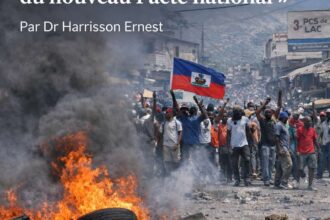
Images of burning streets and displaced families from Port-au-Prince have traveled far beyond the Caribbean. Where many see national trauma, Morvan has found a platform. His rhetoric — both moralizing and media-savvy — transforms the country’s implosion into a performance of civic virtue, a path toward what one might call a Canadian superego — detached, articulate, and unburdened by proximity to the suffering it describes.
Exported Misery, Imported Morality
Morvan’s tone — a mix of indignation and authority — resonates with audiences seeking simple narratives for a complex disaster. Over time, he has come to represent a new archetype of diasporic intellectuals: those who, unable to change Haiti’s reality, dissect it from afar under the moral comfort of Western distance.
The contrast is jarring. In neighborhoods like Cité Soleil or Carrefour-Feuilles, young men die daily under gunfire, while in Canadian studios and conference rooms, their deaths become raw material for eloquent speeches and performative outrage.
The Paradox of Glory
Morvan’s ascent raises a broader dilemma: how does one draw fame or legitimacy from the suffering of others? Between genuine advocacy and opportunistic moralizing lies a fragile line — one that many in the diaspora must navigate. For each conscience forged in the safety of the North, there remains an unhealed shadow in the South.
Whether he intends it or not, Morvan personifies the fractured identity of a generation — one that had to leave to exist, yet can only exist by speaking of what it left behind.
— By Dr. Harrisson Ernest ,
Political analyst and commentator on Haitian governance, security, and diaspora identity
Physician, Psychiatrist, Social Communicator, and Jurist
📧 harrisson2ernest@gmail.com 📞 +1 781 885 4918 / +509 3401 6837