What Is the Value of Attacks Against North American Diplomats When They Are Simply Repeating the Language of Haitian Open Forums?
By Dr. Harrisson Ernest
November 28, 2025
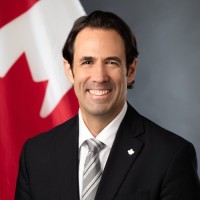
For several days now, criticism against American and Canadian diplomats has intensified within Haiti’s public sphere. They are accused of interfering in national affairs, of commenting on insecurity, even of influencing the balance of power between armed groups and political actors. And yet, these statements often do nothing more than echo what journalists, editorialists, and call-in commentators repeat daily: Haitian politics is corroded by opaque relationships between leaders, businessmen, elected officials, and armed gangs.
So why is what is tolerated — even applauded — when spoken by a Haitian journalist suddenly labeled “interference,” “conspiracy,” or “provocation” when a foreign diplomat repeats it?
1- Verbal violence is common in Port-au-Prince – not in Washington or Ottawa
In Haiti, accusations of collusion with gangs have become standard rhetoric — a Pavlovian reflex in political debate.
It requires no court investigation, no documented proof — suspicion is enough.
The word “gang” has become a tool of:
rapid political disqualification
character destruction
suppression of dissent
manufacturing public enemies
rhetorical combat
This logic took root in radio studios, Facebook talk shows, YouTube livestreams — then moved into TikTok live sessions, and now, the diplomatic arena. The embassies invented nothing: they speak Haiti’s dominant language — a language of suspicion and discredit.
- When diplomatic speech merely echoes local media
Unfortunately, most mediocre mic-holders fail to understand that American and Canadian embassies draw on three principal sources when analyzing the Haitian situation:
reports from international agencies
diplomatic intelligence services
the Haitian press and public opinion itself
When they comment on the crisis, they are often only repeating a narrative already produced by Haitian intellectuals, journalists, and activists.
But this simple mirror effect discomforts the nation: hearing one’s own words repeated by outsiders is deeply unsettling.
Here lies the paradox:
What is legitimate as internal analysis becomes illegitimate when reflected back from abroad.
- A reflex of wounded sovereignty
If diplomatic language shocks more than that of local journalists, it is because it triggers a sensitive question:
Who has the right to name our dysfunctions?
- When a Haitian journalist speaks → it is family criticism.
- When a diplomat speaks → it becomes condemnation from the outside.
- When Washington or Ottawa mention political-criminal collusion, it is no longer just observation — it threatens to become international indictment. Diplomatic words carry weight, even when they merely repeat what is already known.
- A country without an arbiter — where every word becomes a projectile
The absence of justice, credible investigations, and institutional transparency has left room for unfounded speech and for a rise of functionally illiterate voices with microphones.
Rumor replaces evidence.
Accusation replaces procedure.
In such an environment, every statement — especially from abroad — becomes a political act.
Three obvious observations illustrate this emotional landscape:
- When a Haitian journalist is the source → it is seen as analytical freedom and social critique.
- When a call-in show or livestream is the source → suspicion becomes entertainment and normalized opinion.
- When a foreign diplomat is the source → it becomes interference, humiliation, and a threat to sovereignty.
Thus, the substance of the discourse does not change — only the speaker does — and that alone is enough to trigger backlash.
Perhaps the verbal attacks against North American diplomats reveal something deeper:
Haiti accepts its truth only as long as it remains internal.
But when that same truth returns from outside, it becomes unbearable — almost subversive.
Not because it is false, but because it is shameful.
In other words:
It is not the diplomats’ words that disturb —
but the mirror they hold to Haitian voices themselves.
And if Haitians chose instead to reflect, to stop lying and accusing one another, to cease tarnishing their nation’s image — would the foreign gaze not reflect a more dignified, more positive image of our society?
— Dr. Harrisson Ernest
Political Analyst and Commentator on Governance, Security and Diasporic Identity
Specialist in Haitian Political Dynamics
Physician, Psychiatrist, Social Communicator and Jurist
harrisson2ernest@gmail.com | +1 781 885 4918 / +509 3401 6837